
#91- Trading Robots vs. Human Ego: Who Wins in 2026?
-
Posted by

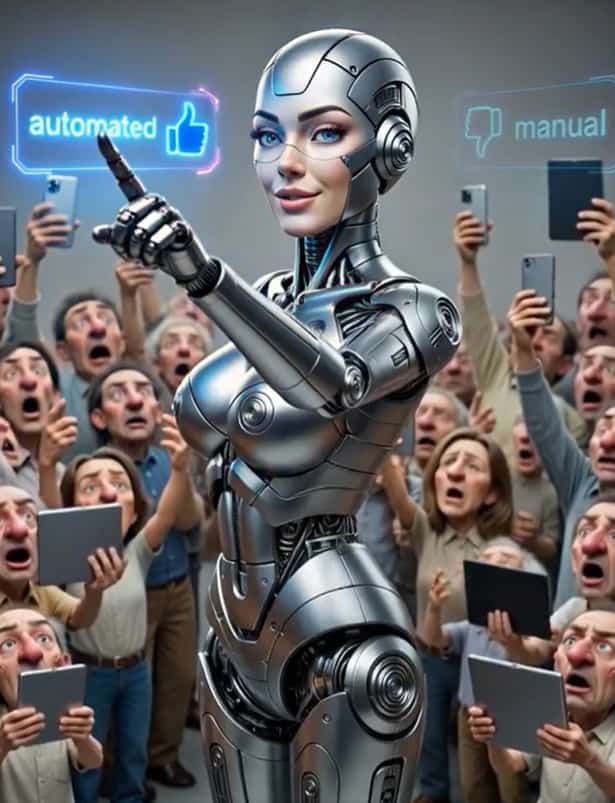
It’s 2026. The market opens. Your robot calmly executes its rules: risk 1%, enter on signal, trail with ATR, no emotion.
Meanwhile, the human trader (you, or the guy next to you) sees the same setup and thinks: “This time it feels different… I’ll just add a little more size.” Or: “It’s been losing too much — I’m skipping this one.” Or: “I’m up big today — time to lock profits early.”
By the end of the month, the robot is quietly up 9.4%. The human is down 14% and emotionally exhausted.
This is the eternal battle: Trading Robots vs. Human Ego.
In 2026, with faster markets, more AI-driven noise, and tighter edges, the winner is clearer than ever.
Spoiler: the robot usually wins — but only if the human gets out of its way.
Round 1: Emotion vs. Discipline
Human Ego
- Revenge trades after losses
- Early profit-taking on winners
- Skipping trades because “it doesn’t feel right”
- Over-sizing during hot streaks
- Panic-closing during normal drawdowns
Trading Robot
- Follows rules 100% of the time
- No fear, no greed, no FOMO
- Takes every qualified signal
- Maintains exact risk parameters
- Treats drawdowns as data, not drama
Winner: Robot (by a landslide).
Round 2: Consistency vs. Variance
Human
- Performance varies wildly month to month
- Great months followed by revenge spirals
- Psychological burnout after losing streaks
Robot
- Statistical consistency over hundreds of trades
- Boring but predictable equity curve
- No emotional burnout
Winner: Robot.
Round 3: Scalability vs. Human Limits
Human
- Can only watch so many pairs and timeframes
- Needs sleep, food, and a life
- Performance degrades with fatigue
Robot
- Runs 24/7 on multiple pairs and strategies simultaneously
- Never tires
- Scales effortlessly across accounts
Winner: Robot.
Round 4: Adaptability vs. Rigidity
Here the human sometimes scores points.
Human
- Can adapt intuitively to new regimes
- Can read context and “feel” when rules should be bent
Robot
- Only as good as its programming
- Struggles with completely new market conditions until updated
But here’s the catch in 2026: Well-designed robots with regime filters, volatility pauses, and periodic updates adapt faster and more consistently than most humans under pressure.
Winner: Robot (with good programming).
The Real Score in 2026: Robot 4 – Human Ego 0
The data is overwhelming.
- EA portfolios with strict rules and minimal human interference consistently outperform discretionary traders over 1+ year periods.
- The best human traders still lose to their own psychology more often than they admit.
- The biggest edge in modern markets isn’t better signals — it’s removing the human from execution.
The human still wins in one area: strategy design and oversight. The best setup is a competent human designing and periodically reviewing the robot, then getting out of its way.
How to Let the Robot Win in 2026
- Build or choose simple, robust EAs (3–8 parameters max)
- Implement hard safety rules (equity kill switch, volatility pause, news filter)
- Schedule checks (weekly 10 min, monthly 30 min) — never daily
- Hide the equity curve during the week
- Pre-commit to non-interference during drawdowns
- Use a small “degen” account for any emotional experiments
Do this and the robot will almost always beat your ego over time.
Final Showdown Truth
In 2026, the market is faster, more efficient, and less forgiving than ever.
Human ego — with its fear, greed, hope, and fatigue — is a liability.
Trading robots — when properly built and left alone — are the superior execution tool.
The winners aren’t the smartest analysts anymore. They’re the ones who design good rules and then have the discipline to let the machines follow them without interference.
Your ego wants to trade. Your future wealth wants the robot to trade.
Let the robot win.
Financial Disclaimer (The Ego Check Edition)
This is not financial advice; it’s an observation on human nature vs. machine discipline. Robots don’t have egos — humans do. The biggest edge in automated trading is often the removal of the human from day-to-day execution. However, poor strategy design or lack of oversight can still lead to losses. No system is foolproof. If you cannot resist interfering with your EAs, you are better off with manual trading or passive investing. aristide-regal.com – where we let robots do what humans do poorly.
More updates : https://www.aristide-regal.com/blog/ and https://x.com/Aristide_REGAL


Leave a Comment